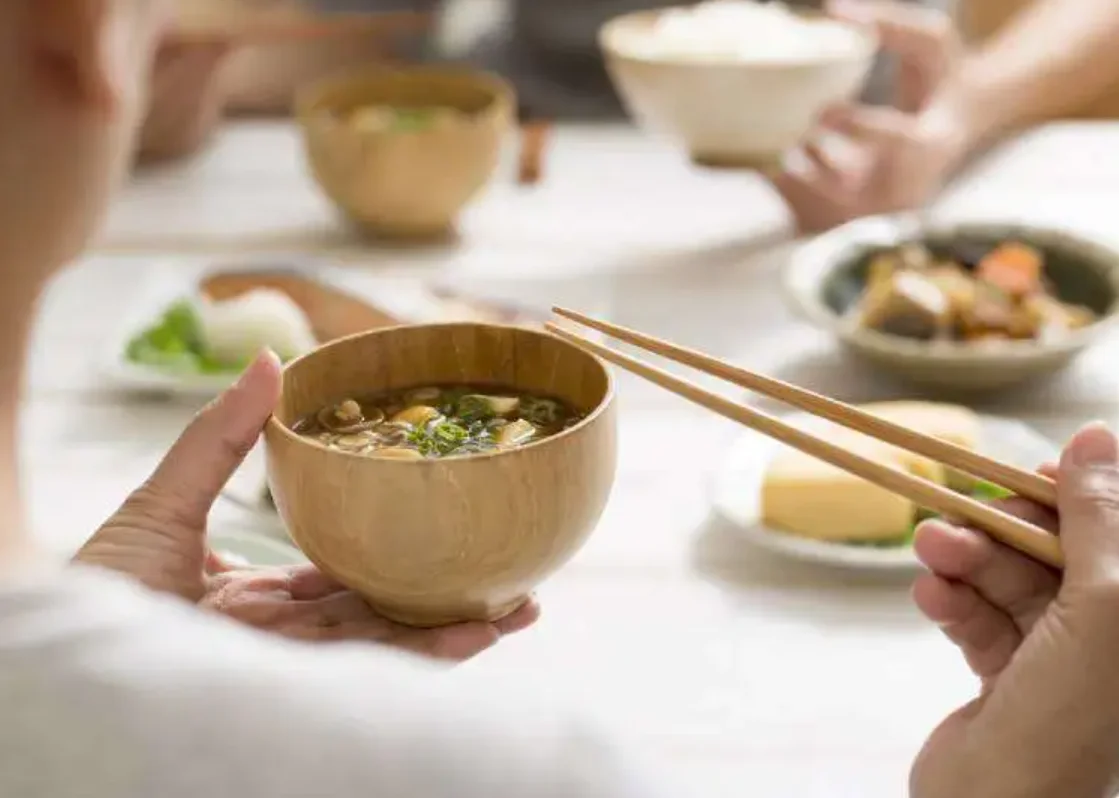
Japan’s food culture is an important part of the travel experience, but enjoying Japanese cuisine involves more than knowing what dishes to order. Dining in Japan can also introduce visitors to customs, manners, and traditions that may differ from what they are accustomed to at home.
For international travelers, understanding a few basic dining customs can make restaurant visits more comfortable and help avoid unintentionally inappropriate behavior. From using chopsticks and handling dishes to ordering, paying, and interacting with restaurant staff, small details can make a meaningful difference.
Japanese dining culture also varies depending on the type of establishment. A casual ramen shop offers a very different experience from a traditional restaurant, sushi counter, izakaya, or formal dining venue.
Understanding these differences allows travelers to approach Japanese food with greater confidence while appreciating the culture behind each meal.
Understanding Japanese Dining Culture
Food in Japan is closely connected with seasonality, presentation, regional traditions, and hospitality.
A meal is often appreciated not only for its flavor but also for its appearance, ingredients, preparation, and the way it is served.
Presentation is part of the experience
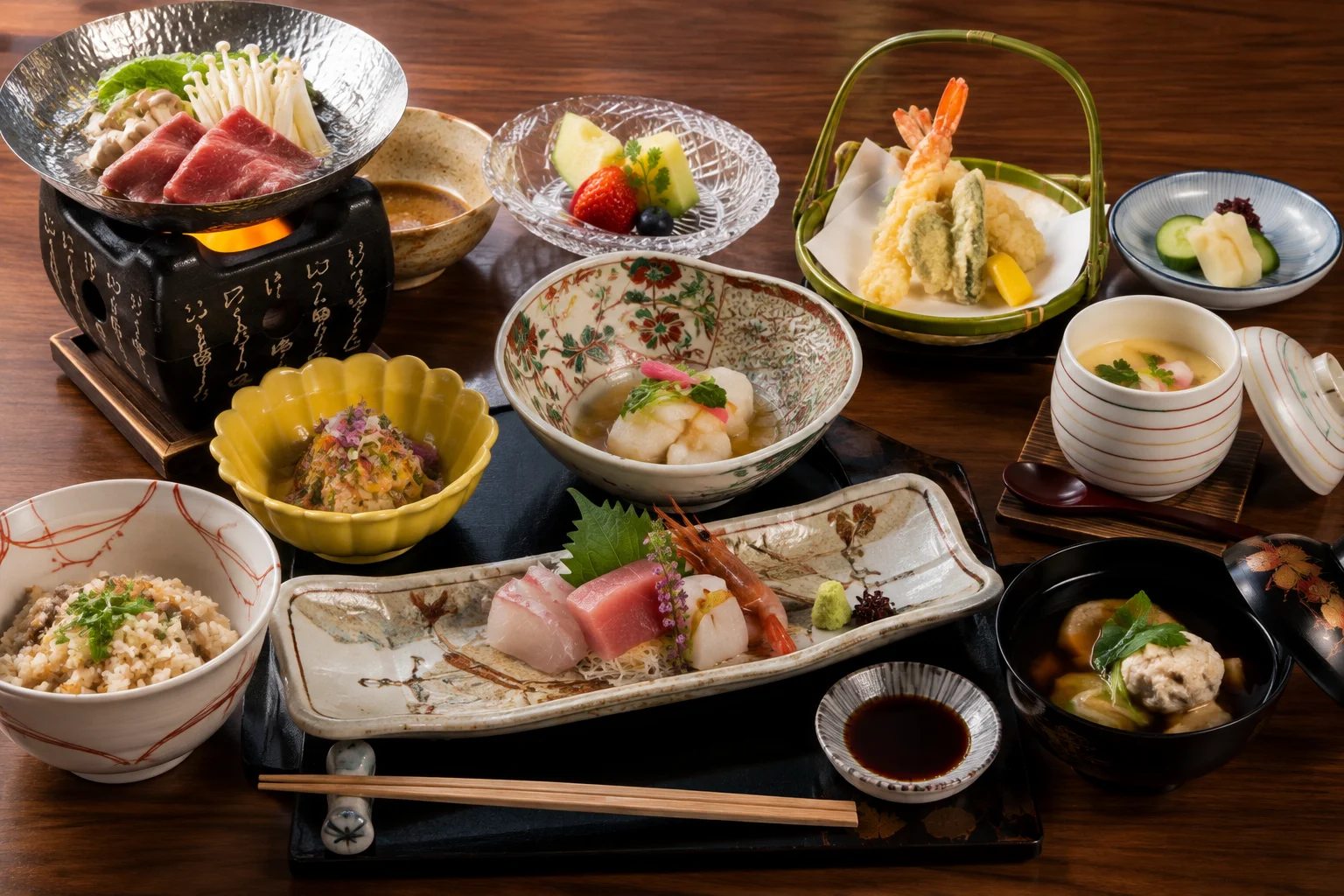
Japanese cuisine often places considerable attention on presentation.
The arrangement of food, choice of tableware, and seasonal ingredients can all contribute to the overall dining experience.
This is one reason why meals may arrive with several small dishes rather than one large serving. Each component can have its own flavor, texture, and purpose.
Seasonality matters
Japanese cuisine frequently reflects the season.
Spring, summer, autumn, and winter can bring different ingredients and preparations to restaurant menus.
Travelers may therefore encounter dishes that are particularly associated with a specific time of year.
Being open to seasonal recommendations can be a good way to experience Japanese food beyond familiar international dishes.
Basic Etiquette Before Eating
A few simple habits can help visitors feel more comfortable when sitting down for a meal.
Say “itadakimasu”
Before eating, Japanese diners commonly say itadakimasu.
The expression reflects appreciation for the food and the people involved in preparing it.
International visitors do not need to feel pressured to pronounce it perfectly. Understanding the meaning and observing the custom respectfully is more important than trying to imitate it perfectly.
Wait until everyone is served
When dining with other people, it is generally considerate to wait until everyone has received their food before beginning.
This is particularly relevant during shared meals or social dining occasions.
In some casual settings, food may arrive at different times, so following the pace of the group can be helpful.
Chopstick Etiquette Every Traveler Should Know
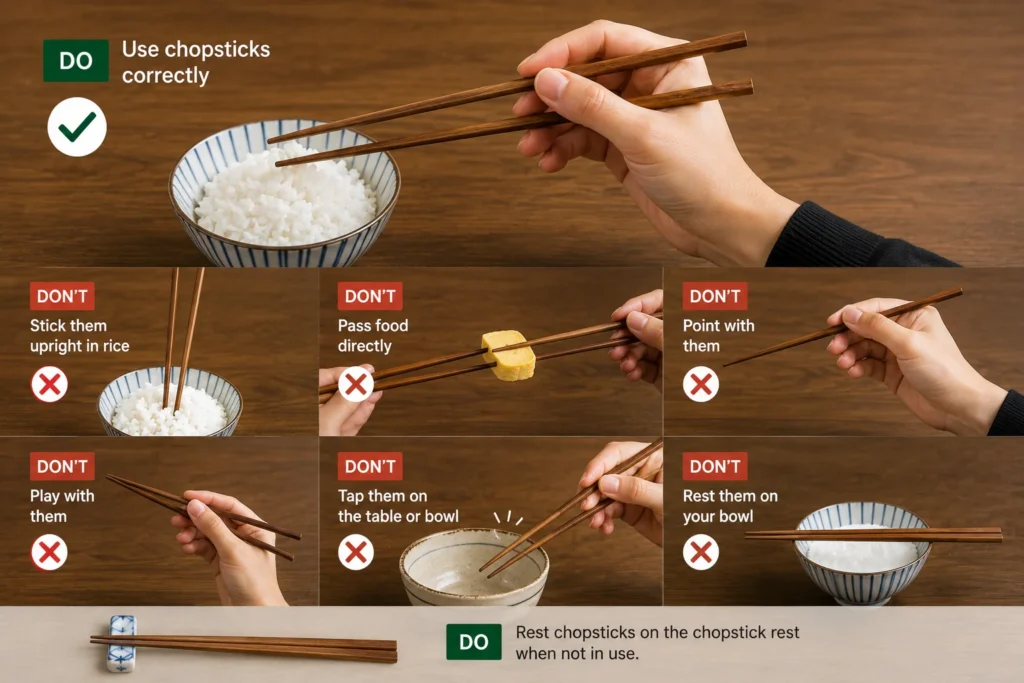
Chopsticks are one of the most important parts of Japanese dining etiquette.
Visitors do not need perfect technique, but there are several behaviors that should be avoided.
Do not stick chopsticks vertically into rice
Placing chopsticks upright in a bowl of rice is associated with funeral rituals in Japan.
For this reason, it is considered inappropriate during an ordinary meal.
When you are not using your chopsticks, place them on the provided chopstick rest or another appropriate surface.
Do not pass food directly between chopsticks
Passing food directly from one pair of chopsticks to another is also associated with funeral customs.
If you want to share food, use serving utensils when they are provided.
Avoid pointing with chopsticks
Chopsticks should not be used to point at people, dishes, or objects.
They are intended for handling food rather than as gestures during conversation.
Do not play with chopsticks
Avoid tapping bowls, waving chopsticks around, or using them as toys.
Keeping movements controlled and focused on eating is generally the safest approach.
Handle chopsticks naturally
If you are unfamiliar with chopsticks, it is perfectly acceptable to take your time.
Restaurants in Japan commonly accommodate visitors from around the world, so there is no need to feel embarrassed if your technique is not perfect.
How to Handle Shared Dishes
Japanese meals can involve several shared dishes, particularly when dining with a group.
Use serving utensils when available
If a shared dish comes with serving chopsticks or another utensil, use those rather than your personal chopsticks.
This is a simple way to maintain good table hygiene and etiquette.
Take a reasonable portion
When sharing food, take an appropriate amount rather than filling your plate immediately.
This allows everyone at the table to enjoy the meal.
Consider others when ordering
For group dining, it can be useful to choose several dishes that offer different flavors and textures.
This makes the meal easier to share and allows everyone to try multiple specialties.
Restaurant Etiquette in Japan
Japanese restaurants can vary significantly in style, so visitors should pay attention to the environment.
Wait to be seated when appropriate
At some restaurants, staff will direct guests to their table.
Unless the establishment clearly operates on a self-service basis, waiting for instructions is generally the safest approach.
Follow the restaurant’s system
Some restaurants use ticket machines, counter ordering, QR codes, or other systems.
If you are unsure how to order, look around to see how other customers are using the restaurant or politely ask a staff member for assistance.
Keep your voice at a reasonable level
Being considerate of other diners is important.
Restaurants can range from very quiet establishments to energetic casual venues, so match your volume to the environment.
Different Types of Japanese Dining Experiences
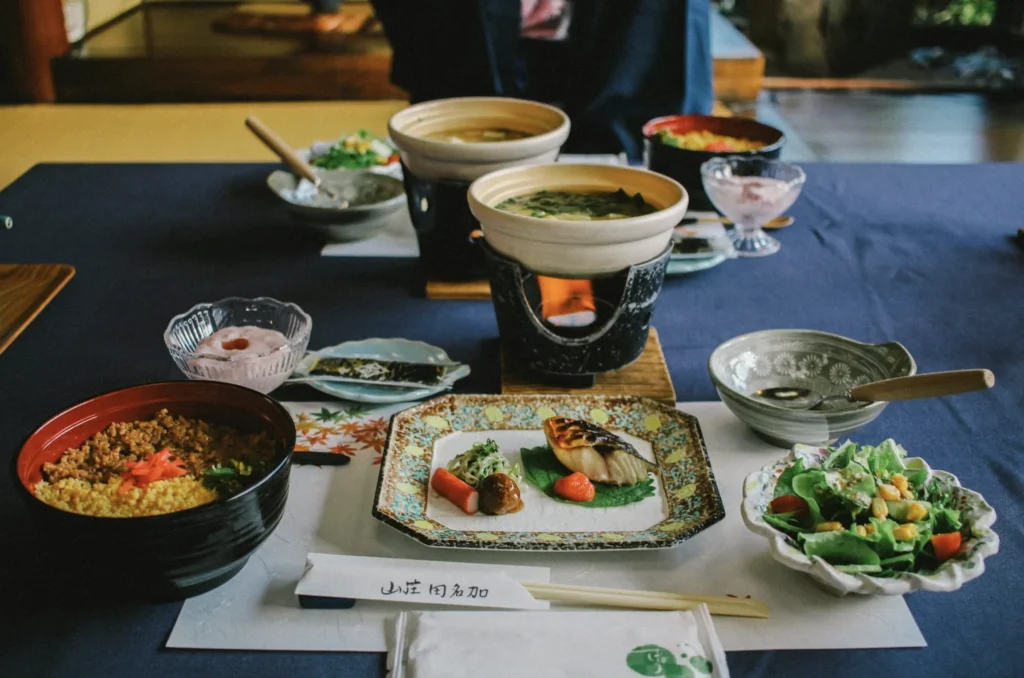
Understanding the type of restaurant you are visiting can help set expectations.
Sushi restaurants
Sushi can range from casual conveyor-belt restaurants to highly formal sushi counters.
At a counter-style restaurant, chefs may prepare pieces individually and serve them directly to guests.
Visitors should pay attention to the pace of service and follow the restaurant’s lead.
Izakaya
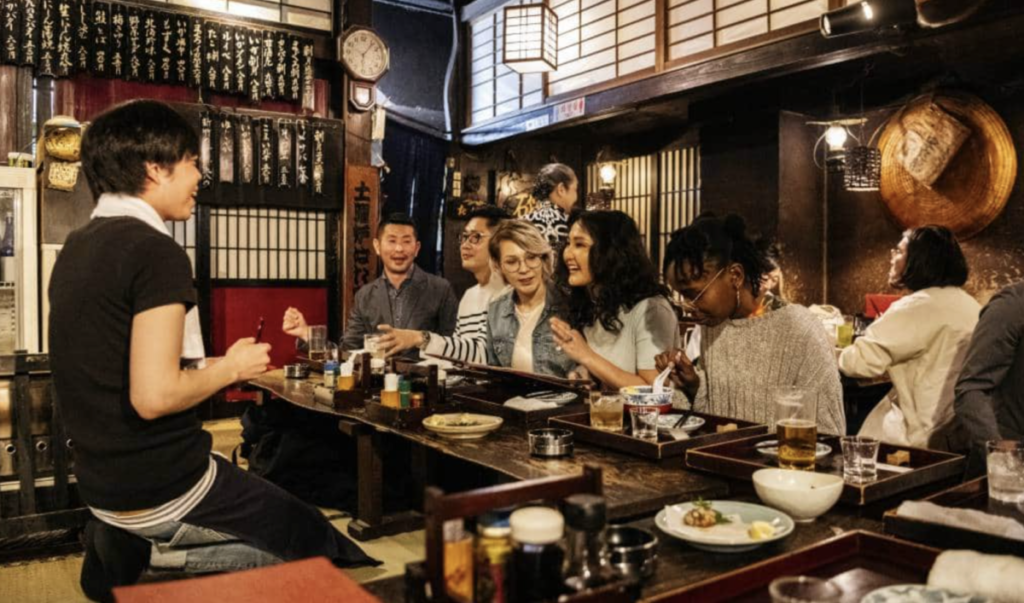
Izakaya are casual Japanese establishments where people gather for drinks and a variety of dishes.
Meals are often shared, making them a social dining experience.
The atmosphere can be lively, particularly during evening hours.
Ramen shops
Ramen restaurants are often more casual and focused on efficiency.
Some use ticket machines where customers select and pay for their order before sitting down.
Once the meal is served, diners can generally eat at their own pace while being mindful of the restaurant’s environment.
Traditional Japanese restaurants
Traditional establishments can involve more formal service and dining customs.
Guests may encounter seasonal menus, carefully presented dishes, tatami seating, or multi-course meals.
When visiting this type of restaurant, taking time to observe the surroundings and follow staff instructions can make the experience more comfortable.
Understanding Tatami Seating
Some traditional restaurants and accommodations use tatami rooms.
Visitors may need to remove their shoes before entering these spaces.
Remove shoes when requested
If there is a designated place for shoes at the entrance, follow the restaurant’s instructions.
Avoid stepping onto tatami mats while wearing outdoor footwear.
Sit appropriately
Traditional seating arrangements can differ from Western-style dining.
If you are unfamiliar with the setup, observe how other guests sit or follow the guidance of the staff.
The most important thing is to treat the space carefully and respectfully.
How to Order Food in Japan
Ordering food can initially feel challenging when visiting a restaurant where the menu is unfamiliar.
Check the menu carefully
Many restaurants now provide menus in multiple languages or with photographs.
Pictures can be especially useful when you are unfamiliar with the names of dishes.
Do not hesitate to ask about ingredients if you have dietary restrictions or allergies.
Use simple communication
You do not need to speak fluent Japanese to order successfully.
Learning a few basic expressions can be useful, but gestures, photographs, translation tools, and English-language menus can also help.
Ask before making substitutions
Some restaurants prepare dishes according to a specific recipe.
If you have a preference or dietary restriction, politely ask whether an adjustment is possible rather than assuming substitutions are available.
Paying the Bill
Payment customs can vary between restaurants.
Check whether payment is made at the table or counter
In some establishments, the bill is paid at the table. In others, customers take the bill to a cashier.
Following the restaurant’s system is usually straightforward once you observe what other diners are doing.
Tipping is generally not expected
Japan does not generally follow the same tipping culture found in countries such as the United States.
Leaving extra money on the table can sometimes cause confusion.
Instead, simply paying the stated amount and expressing your appreciation is generally appropriate.
Drinking Etiquette
Drinking can be an important part of social dining in Japan, particularly during group meals.
Wait before drinking during group occasions
When dining with colleagues or friends, it is common to wait until everyone has received their drink before beginning a group toast.
You may hear kanpai, meaning “cheers,” before everyone starts drinking.
Do not feel pressured to drink alcohol
Travelers who do not drink alcohol can simply choose a non-alcoholic beverage.
Social dining does not require everyone to consume alcohol.
Business Dining in Japan
Business meals can involve additional social considerations.
Follow the host’s lead
If you are attending a meal with Japanese colleagues or clients, observing their behavior can help you understand the expected rhythm of the meal.
This includes when to begin eating, how dishes are shared, and when the meal is considered finished.
Consider seating arrangements
In formal settings, seating positions can carry significance.
If you are unsure where to sit, waiting for the host or other participants to indicate your seat can avoid an awkward situation.
Keep conversation balanced
A business meal is not necessarily an extension of a formal meeting.
Food and conversation can both play important roles, so allow the meal to develop naturally rather than focusing exclusively on business topics.
Experiencing Japanese Food Beyond Famous Dishes
International visitors often arrive in Japan with a list of familiar foods they want to try.
Sushi, ramen, tempura, and other internationally recognized dishes are certainly worth experiencing, but Japanese cuisine extends far beyond these options.
Try regional specialties
Different regions have their own culinary traditions.
Hokkaido, for example, is known for seafood, dairy products, agricultural ingredients, and a variety of regional dishes.
Other parts of Japan have their own specialties based on local ingredients and history.
Exploring regional cuisine can make traveling between cities more rewarding.
Explore seasonal dishes
A dish that appears on a menu during one season may not be available at another time.
Seasonal eating is one of the easiest ways to experience an aspect of Japanese food culture that may be less familiar to international visitors.
Dining in Sapporo
Sapporo provides a particularly interesting setting for travelers who want to experience Hokkaido’s food culture.
The city combines regional specialties with Japanese and international dining options, making it possible to explore different styles of cuisine during the same trip.
Travelers can experience local ingredients through seafood dishes, ramen, dairy-based foods, and other Hokkaido specialties.
For visitors looking for a more refined dining environment, exploring the restaurants sapporo options available in the city can also provide an opportunity to experience regional ingredients in an upscale setting.
Respecting Restaurant Staff
Small interactions with restaurant staff can contribute significantly to a positive dining experience.
Be patient
Restaurants can have different service styles from what international visitors are accustomed to.
Some meals may be served quickly, while others are intentionally paced.
Allowing staff to work according to the restaurant’s normal rhythm can make the experience more comfortable.
Express appreciation
A simple arigatou gozaimasu is a polite way to express thanks.
Even when you do not speak Japanese fluently, showing appreciation through a smile and respectful behavior is always welcome.
Common Mistakes International Travelers Should Avoid
Visitors do not need to memorize every Japanese dining rule, but avoiding a few common mistakes can help.
Avoid eating while walking in inappropriate places
Whether eating while walking is acceptable can depend on the location and context.
Rather than assuming it is always acceptable or always prohibited, pay attention to local expectations and designated eating areas.
Do not leave excessive food unnecessarily
Food waste is generally best avoided.
Ordering an appropriate amount and sharing dishes thoughtfully can make the dining experience more considerate.
Do not assume every restaurant accepts the same payment method
Payment methods can differ between establishments.
Having a suitable payment option available can prevent unnecessary inconvenience.
Making the Most of Japanese Dining Culture
The best way to approach dining in Japan is with curiosity rather than anxiety.
Visitors are not expected to know every custom perfectly.
If you make a small mistake, remaining polite and adjusting your behavior is usually enough.
Observe before acting
When you are uncertain, take a moment to see what other diners are doing.
This can help you understand everything from where to place your shoes to how to use a particular table setting.
Ask when necessary
Restaurant staff are accustomed to helping visitors.
If you are unsure how to order, where to sit, or how to use something at the table, politely asking is usually better than guessing.
Final Thoughts
Japanese dining culture offers international travelers an opportunity to experience more than just the country’s food.
The customs surrounding meals reflect ideas about respect, hospitality, seasonality, presentation, and consideration for others.
Understanding basic chopstick etiquette, knowing how to behave in different restaurant environments, respecting shared dishes, and following local payment and seating customs can make dining experiences considerably more comfortable.
At the same time, travelers should not become overly concerned about making mistakes. The most important principles are simple: observe your surroundings, respect the people around you, follow restaurant instructions, and remain open to trying unfamiliar foods.
Whether enjoying a casual bowl of ramen, sharing dishes at an izakaya, experiencing seasonal cuisine, or sitting down for a more formal meal, approaching Japanese food culture with curiosity and respect can make dining one of the most memorable parts of a trip to Japan.
Frequently Asked Questions
What is the most important dining etiquette in Japan?
Respect for others is one of the most important principles. This includes using chopsticks appropriately, keeping your voice at a suitable level, following restaurant instructions, and being considerate when sharing food.
Is tipping required at Japanese restaurants?
Tipping is generally not expected in Japan. Paying the stated amount is normally sufficient.
Can foreigners make mistakes with Japanese dining etiquette?
Yes, and that is completely understandable. Visitors are not expected to know every custom. Being polite, observing others, and adjusting when necessary are usually enough.
Is it rude to leave food in Japan?
Leaving a small amount of food is not automatically considered a serious breach of etiquette, but avoiding unnecessary food waste is generally considerate.
Do I need to speak Japanese to eat at restaurants in Japan?
No. Many restaurants accommodate international visitors through English menus, photographs, ordering machines, translation tools, or other methods. Learning a few simple Japanese expressions can nevertheless make the experience easier.